Artist
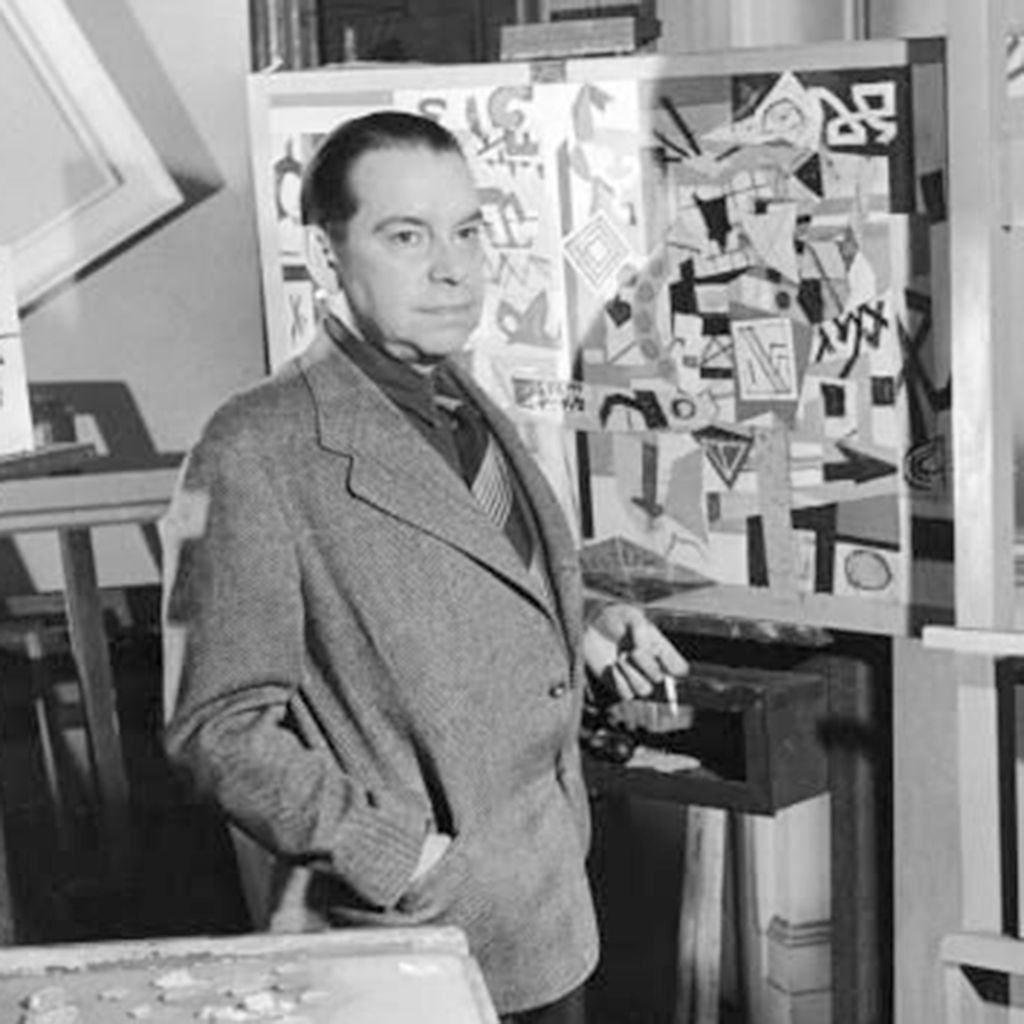
Stuart Davis
Stuart Davis (1892–1964)
Pioneer of American Modernism
Stuart Davis was a preeminent figure of the American Modernist movement, celebrated for his ability to translate the energy of the 20th-century American experience into a bold, abstract visual language. Bridging the gap between European Cubism and the burgeoning American "Pop" aesthetic, Davis's work is characterized by its vibrant color palettes, syncopated rhythms, and a deep-seated connection to jazz and commercial culture.
Davis began his career under the tutelage of Robert Henri, leader of the Ashcan School, where he learned to find beauty in "life in the raw." However, his trajectory shifted dramatically after exhibiting in the seminal 1913 Armory Show. Exposed to the avant-garde works of Matisse and Picasso, Davis became one of the first American artists to fully embrace abstraction.
His mature style—often described as "Colonial Cubism"—fused the structural rigor of European modernism with uniquely American motifs:
Jazz Rhythms: Davis viewed his compositions as visual improvisations, mirroring the "swing" and syncopation of the jazz music he loved.
Commercial Vernacular: Long before the Pop Art movement of the 1960s, Davis integrated consumer products (like Lucky Strike packages), neon signs, and bold typography into his canvases.
Urban Energy: His works often pulse with the frantic pace of New York City, utilizing flat, interlocking planes of color to create a sense of architectural depth and motion.
Throughout the 1930s and 40s, Davis was a tireless advocate for artists' rights, serving as a leader in the Artists' Union and the WPA Federal Art Project. His murals, such as Swing Landscape (1938), remain landmarks of public American art.
Today, Davis is recognized as the bridge between the early American modernists and the later Pop and Abstract Expressionist movements. His work is held in the permanent collections of the world's most prestigious institutions, including:
The Metropolitan Museum of Art, New York
The Museum of Modern Art (MoMA), New York
The Whitney Museum of American Art, New York
The Art Institute of Chicago
"I paint what I see in America, in other words I paint the American Scene." — Stuart Davis
Certain pivotal works by Stuart Davis, capturing his early American modernist and colonial cubist aesthetics, are accessible strictly through private networks. The nature of these holdings prevents online exhibition. Reach out to discuss specific pieces from this defining period.
Your Cart
(0)Your cart is empty
Add an object to get started.