If you’ve bought art at auction, you know the drill. You register, you preview, you bid, you pay — including the house’s premium — and a few weeks later the work arrives. It’s a system. Transparent, familiar, and increasingly accessible online.
The private market works differently. There’s no catalogue, no paddle, no public result. And for collectors who haven’t navigated it before, that opacity can feel like a barrier. It shouldn’t. The private market is where most serious collectors eventually land — not because it’s exclusive, but because it’s better suited to how good art actually changes hands.
Here’s what you need to know to participate confidently.
Why the private market exists
Start with a simple question: why would a seller choose not to go to auction? The answers are more practical than mysterious.
Auction is a public event. The work, the estimate, the result — all of it becomes part of the permanent record. If a piece fails to sell, or sells below estimate, that history follows it. Sellers who care about discretion, or who believe their work is worth more than the auction market might deliver on a given day, often prefer a private transaction.
Buyers benefit for the same reasons. A private sale removes competitive pressure, gives you time to do due diligence properly, and saves you the buyer’s premium — which at the major houses now runs 26–28% on top of the hammer price. On a $50,000 work, that’s $13,000+ in fees before framing or shipping.
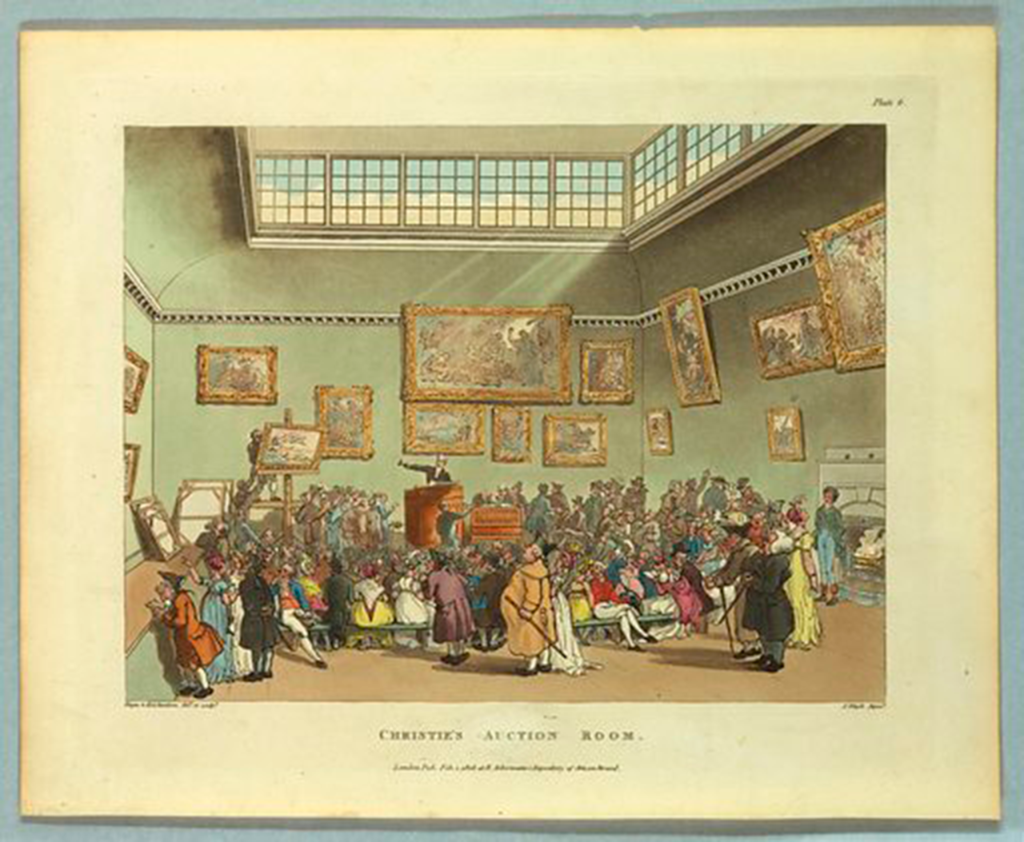
Christie’s Auction Room, c. 1808 — the more things change…
“The private market isn’t a back room. It’s where most serious collectors prefer to operate once they understand how it works.”
Auction vs. private: the honest comparison
At auction
- Public results — your purchase is on the record
- Buyer’s premium of 26–28% on top of hammer
- Competitive bidding can push prices above fair value
- Limited time for due diligence before bidding
- Condition reports are helpful but not exhaustive
- Works sell on a fixed date — timing not yours to control
Through a private dealer
- Discreet — no public record of the transaction
- No buyer’s premium — the price is the price
- Negotiation possible; no competitive pressure
- Time to commission independent condition reports
- Dealer’s reputation is on the line — they stand behind the work
- Access to works that never come to market publicly
How a private sale actually works — step by step
You express interest or the dealer reaches out
Private sales begin with a conversation. Either you tell a dealer what you’re looking for — a specific artist, a price range, a subject — or a dealer contacts you because something has come in that matches your profile. Good dealers maintain collector relationships and make targeted calls when the right work arrives. This is the “off-market access” you hear about. It’s real, and it’s built on trust.
The dealer presents the work with full documentation
A reputable dealer will provide high-resolution images, dimensions, full provenance documentation, any existing condition reports, and catalogue raisonné references where applicable. This should come proactively — you shouldn’t have to chase it. Gaps in provenance are common and not automatically a problem, provided they’re acknowledged honestly rather than glossed over.
You do your own research
Run auction comparables. Check the catalogue raisonné. Look at condition carefully. If the work is significant, commission an independent conservator’s opinion. A good dealer will actively encourage this. It’s also worth knowing that genuinely desirable works do move quickly — urgency isn’t always manufactured, though it should always come with transparency.
Price is discussed — and sometimes negotiated
Unlike auction, where the price is set by the room, private transactions allow for conversation. This doesn’t mean every price is negotiable, but you can ask questions, present your research, and have a genuine discussion about value. A dealer who can’t explain how they arrived at their price isn’t someone you should trust with a significant purchase.
Terms agreed, invoice issued, work delivered
A formal invoice is issued with full details — artist, title, date, medium, dimensions, edition information, and provenance. Payment terms are agreed (some dealers offer staged payments on significant works). The work ships professionally, insured, and any certificates of authenticity transfer to you.
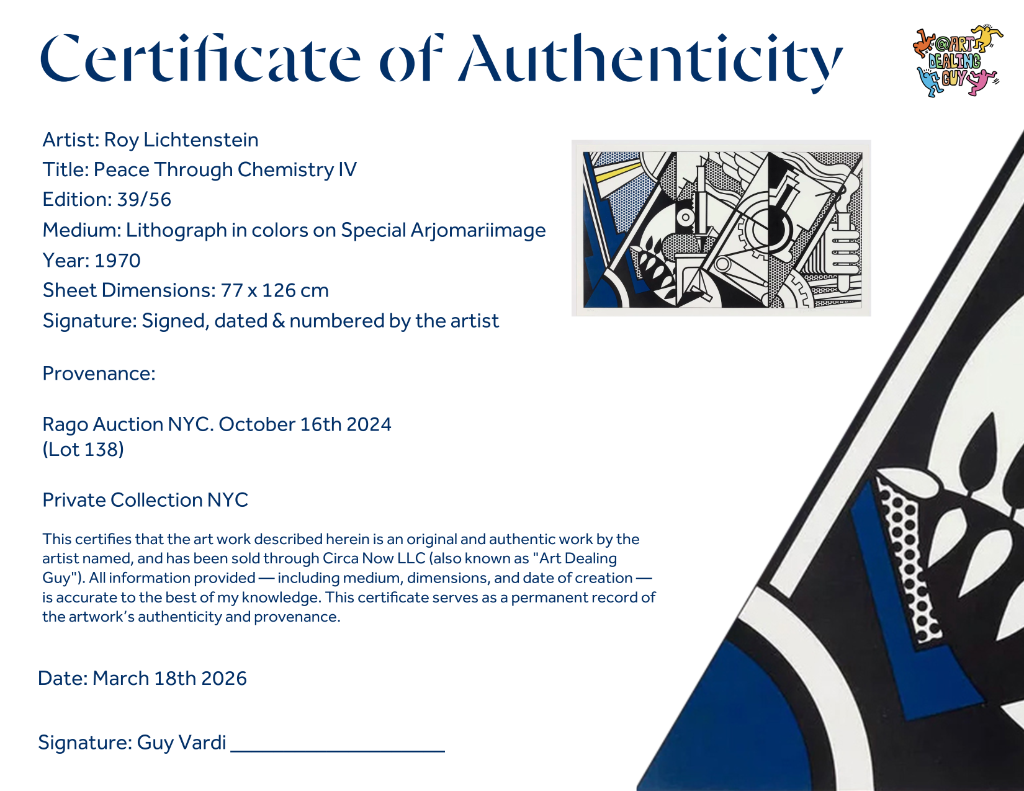
A Certificate of Authenticity issued by Art Dealing Guy for Roy Lichtenstein’s Peace Through Chemistry IV, 1970, 39/56 — lithograph in colors. Provenance traced to Rago Auction NYC, October 2024. Every private sale should come with documentation this complete.
What makes a private dealer worth working with
Green flags
- Proactively provides full provenance and documentation without being asked
- Acknowledges gaps in provenance honestly rather than glossing over them — gaps are common; evasiveness is not
- Encourages independent due diligence rather than pressuring a quick decision
- Has a traceable body of past work — exhibition history, prior sales, published placements
- Is transparent about how they arrived at the asking price
- Communicates clearly about condition, including any issues
Red flags
- Provenance gaps brushed past with no explanation — “acquired from a European collection” and no willingness to elaborate further
- Pressure to decide immediately with no transparency about why — genuine urgency comes with explanation, not just pressure
- Reluctance to provide high-resolution detail images or a written condition report
- Prices significantly below comparable works with no clear explanation
- Resistance to independent appraisal or authentication
The question collectors ask most
The most common question from collectors new to the private market: “How do I know I’m not overpaying?”
The honest answer: the same way you would at auction, just with more time and less pressure. Run your comparables. Understand the edition size, the condition, the market trajectory for that artist. Know what comparable works have actually sold for at the major houses — not asking prices, but realized results.
A good private dealer isn’t trying to obscure value — they’re trying to match the right work with the right collector. Their reputation depends on you being happy with the transaction five years from now, not just the day you sign the invoice.
How to start
The simplest entry point is a direct conversation. Tell a dealer what you collect, what you’re looking for, and what your budget looks like. A good dealer will be honest about whether they can help — and if they can’t, they’ll often point you toward someone who can. The art world is smaller than it looks, and reputation travels fast in both directions.
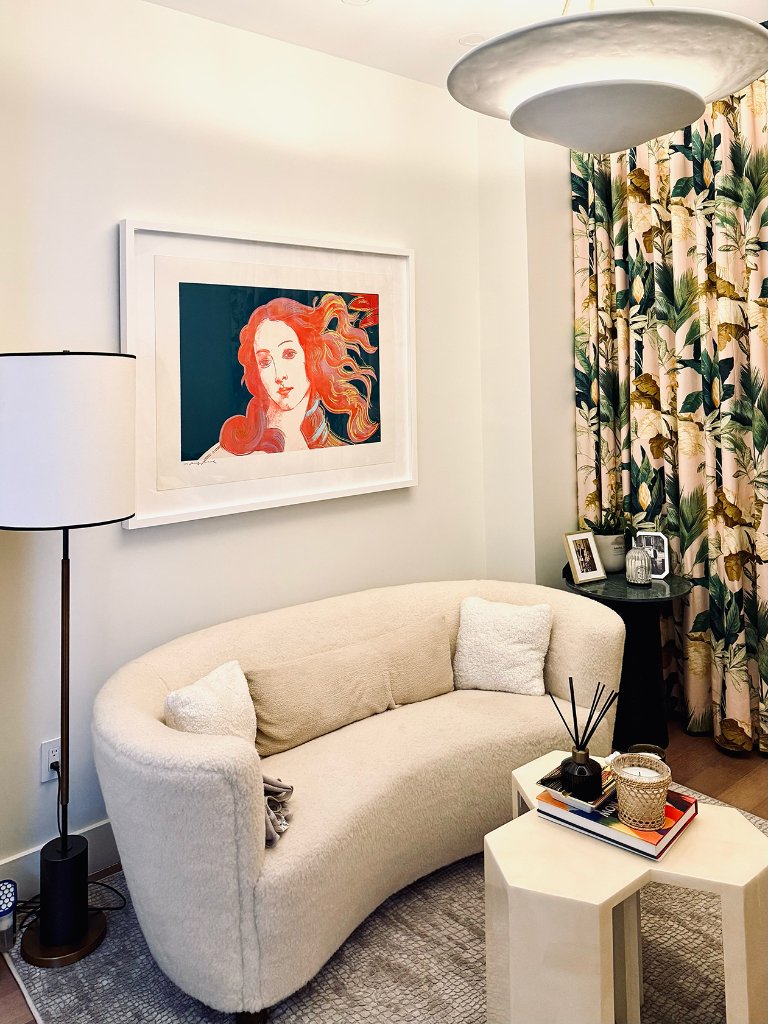
Andy Warhol, Details of a Renaissance Painting (Sandro Botticelli, Birth of Venus) — privately placed in a New York residence. The kind of acquisition that happens quietly, through relationships, not at auction.
The private market isn’t complicated — it just runs on different conventions than the auction room. Once you understand those conventions, it’s a more comfortable place to buy than most collectors expect.
If you’re curious about what’s currently available privately, or want to talk through what you’re looking for, that’s the conversation I’m always happy to have.
Ready to explore the private market?
Tell me what you collect and what you’re looking for. No pressure, no obligation — just a straight conversation about what’s possible.
Start the conversation →