Jean-Michel Basquiat
Boxer Rebellion
1982/83 -2018
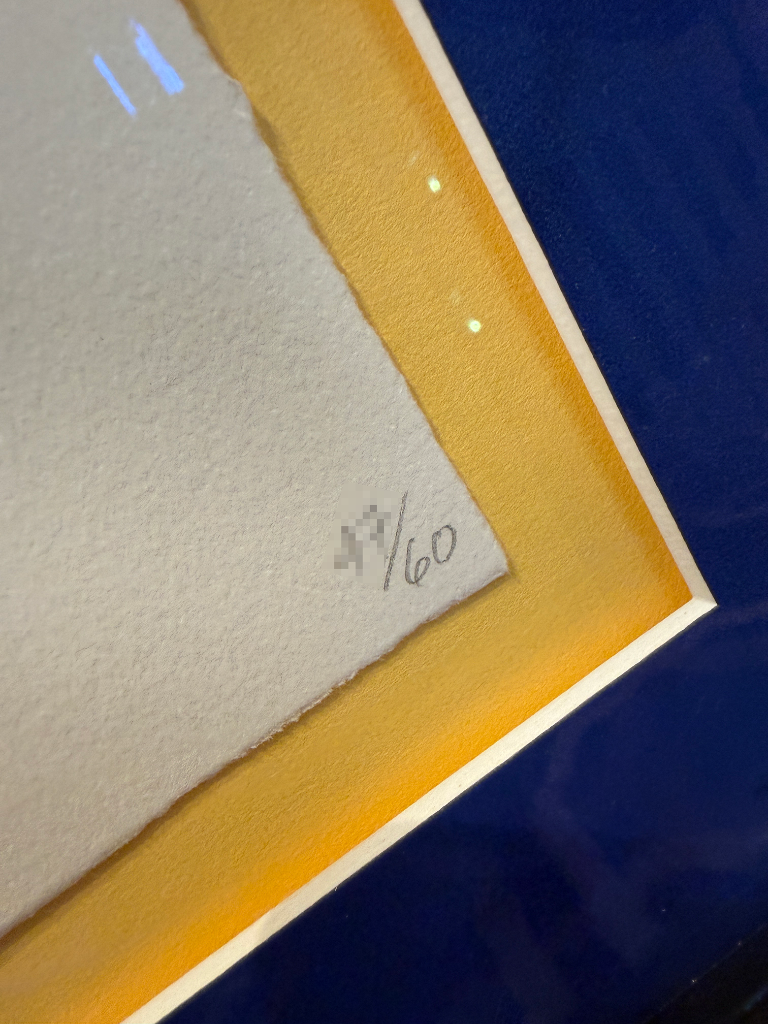
Edition of 60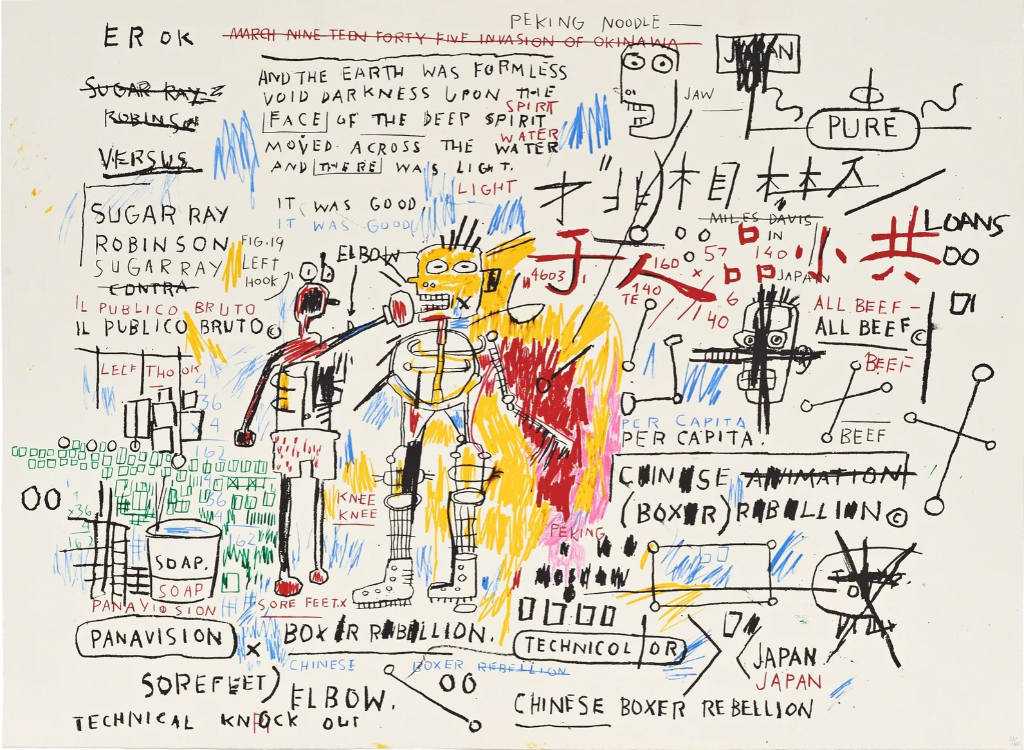
About This Piece
Medium
Screen Print
Dimensions
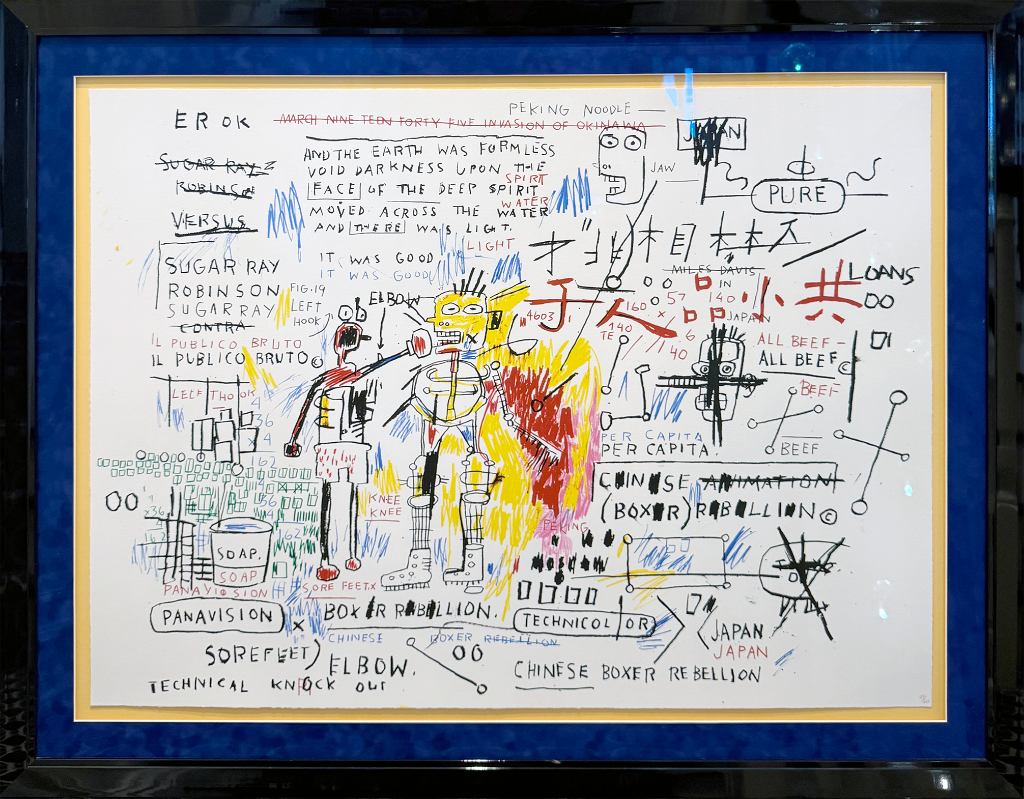
37 × 48 in | 94 × 121.9 cm with frame included
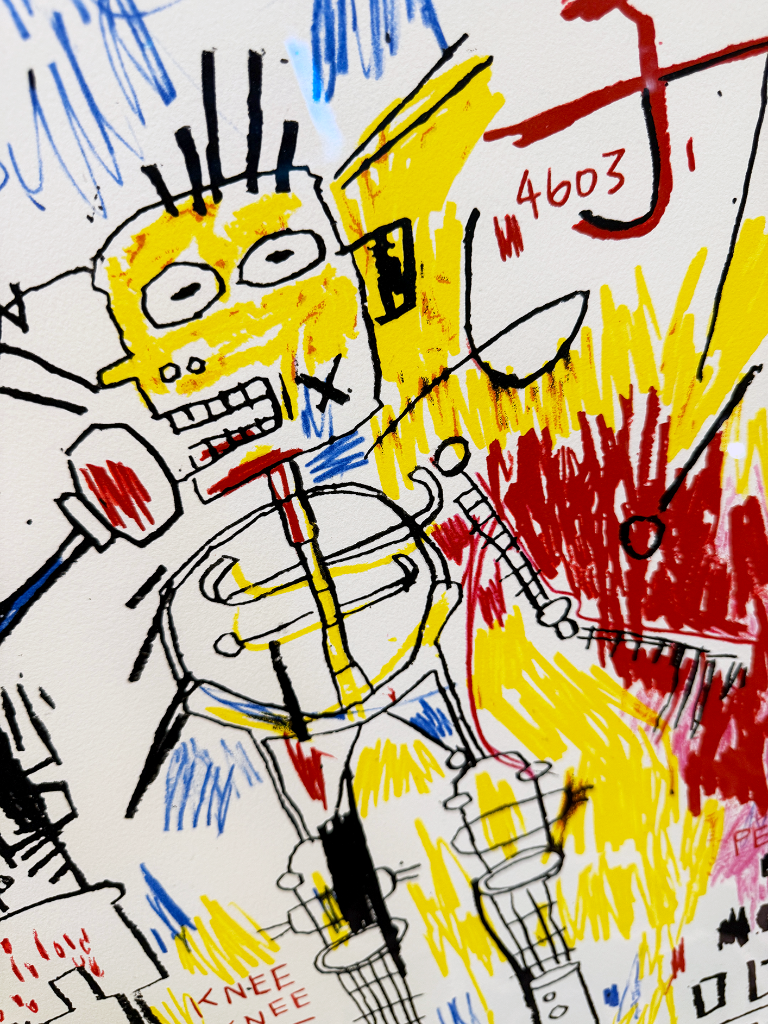
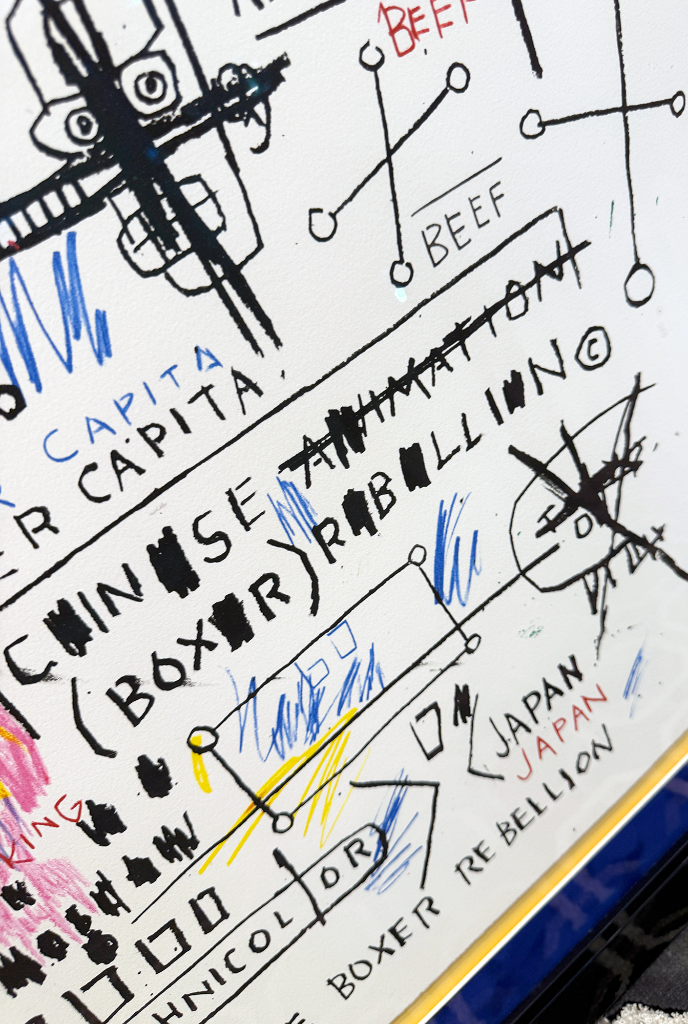
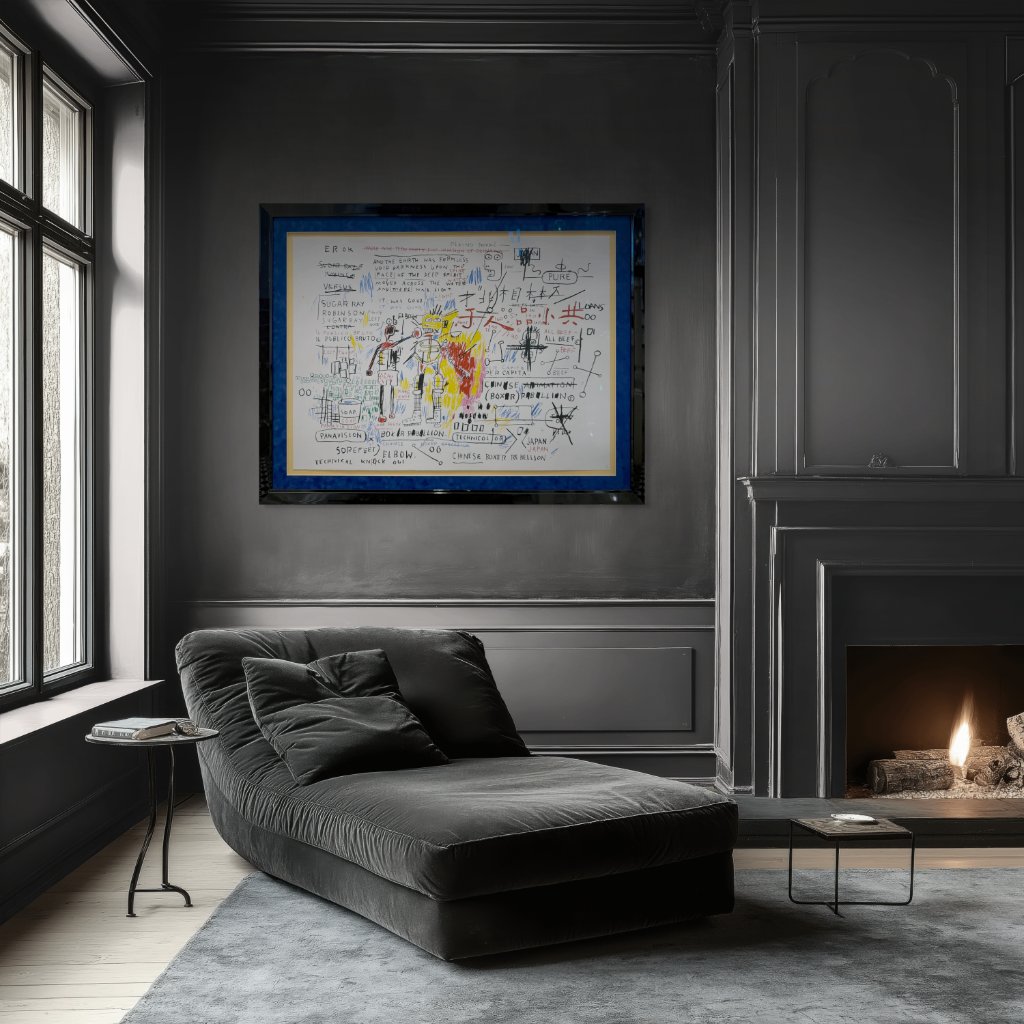
Boxer Rebellion translates the raw intensity of Basquiat's neo-expressionist practice into the graphic medium — two skeletal, almost mechanical figures locked in combat, rendered in bold red, yellow, and black against a field of scrawled lines and anatomical annotations: "ELBOW," "KNEE." The figures are simultaneously athletes and diagrams, bodies both celebrated and dissected.
The composition is dense with text and symbol, as Basquiat's work always is. The title anchors the piece to the Yihetuan Movement of 1899–1901 — the Chinese anti-foreign, anti-imperialist uprising — while the surface layer pulls in "SUGAR RAY ROBINSON VERSUS," positioning the boxing ring as its own theater of triumph and exploitation. The collision is intentional: two forms of resistance, separated by continents and decades, mapped onto the same pictorial space.
Around them, Basquiat scatters the language of commerce and consumption. "LOANS," "ALL BEEF," "PER CAPITA" — the vocabulary of capitalism reduced to headline fragments. "PANAVISION," "TECHNICOLOR," and clusters of © symbols invoke Hollywood's machinery and the art world's own appetite for ownership, fame, and intellectual property. Nothing here is decorative; every mark carries freight.
Boxer Rebellion belongs to a body of work from Basquiat's mature period in which the Black athlete — particularly the boxer — serves as a focal point for thinking about resilience, historical erasure, and structural exploitation. Sugar Ray Robinson and the Yihetuan rebels occupy the same compositional logic: figures who resisted, whose stories were absorbed and repackaged by the systems that opposed them. Basquiat refuses to let either narrative settle.
The print retains the urgency of his painted surfaces — the layering, the cross-outs, the sense that the image is still in motion — while extending his reach into a medium built for multiple hands and wider circulation.
Boxer Rebellion
Inquire about this piece →Your Cart
(0)Your cart is empty
Add an object to get started.