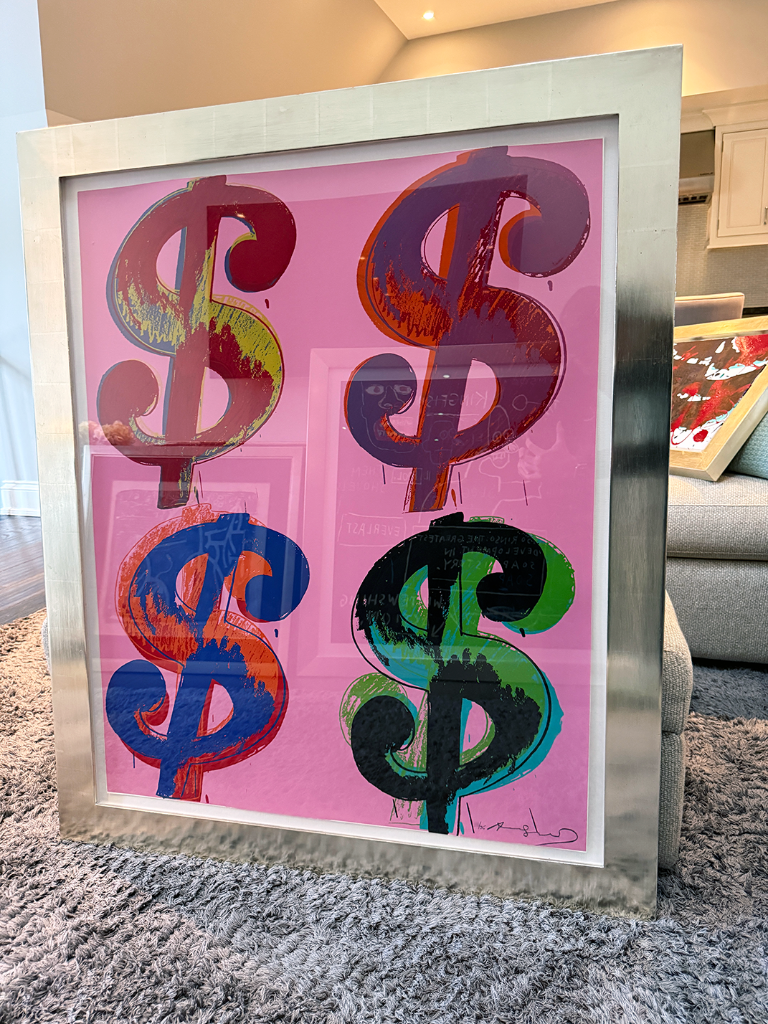
Every week I get a version of the same question. Someone has found a Warhol print — at auction, through a dealer, sometimes at an estate sale — and they want to know: is this the real thing, is it worth what they’re asking, and should I buy it?
The honest answer is always: it depends. But after fifteen years in this market, I can tell you exactly what it depends on — and if you understand these fundamentals, you’ll make far better decisions than most buyers walking into this space blind.
First: Understand What “A Warhol Print” Actually Means
This is where most collectors stumble. Warhol was one of the most prolific printmakers of the twentieth century. He worked across screenprints, offset lithographs, and photographic prints — and the differences between them matter enormously, both in terms of authenticity and value.
The most important distinction is between hand-finished screenprints from his Factory studio — often produced in numbered limited editions of 250 or fewer — and commercial offset prints or later posthumous editions, which were produced in much larger quantities and carry significantly less market value.
“The number one mistake collectors make is assuming that because something is ‘a Warhol,’ the edition size and publication details don’t matter. They matter enormously.”
When you’re evaluating any Warhol print, the first question isn’t “is it real?” — it’s “what exactly is it?” A numbered screenprint from the original Factory edition of Flowers (1970) and a later authorized offset reproduction may both be legitimate Warhol works. But they occupy completely different tiers of the market.
The Catalogue Raisonné Is Your Bible
For prints specifically, the standard reference is the Feldman & Schellmann catalogue raisonné — commonly referred to as the “F & S” numbers you’ll see in auction listings and dealer descriptions. Every serious Warhol print edition is catalogued here with its edition size, printer, publisher, date, and dimensions.
If a seller can’t give you a Feldman & Schellmann number, that’s your first red flag. If the work’s dimensions or edition size don’t match the catalogue entry, that’s a serious problem. This is non-negotiable due diligence.
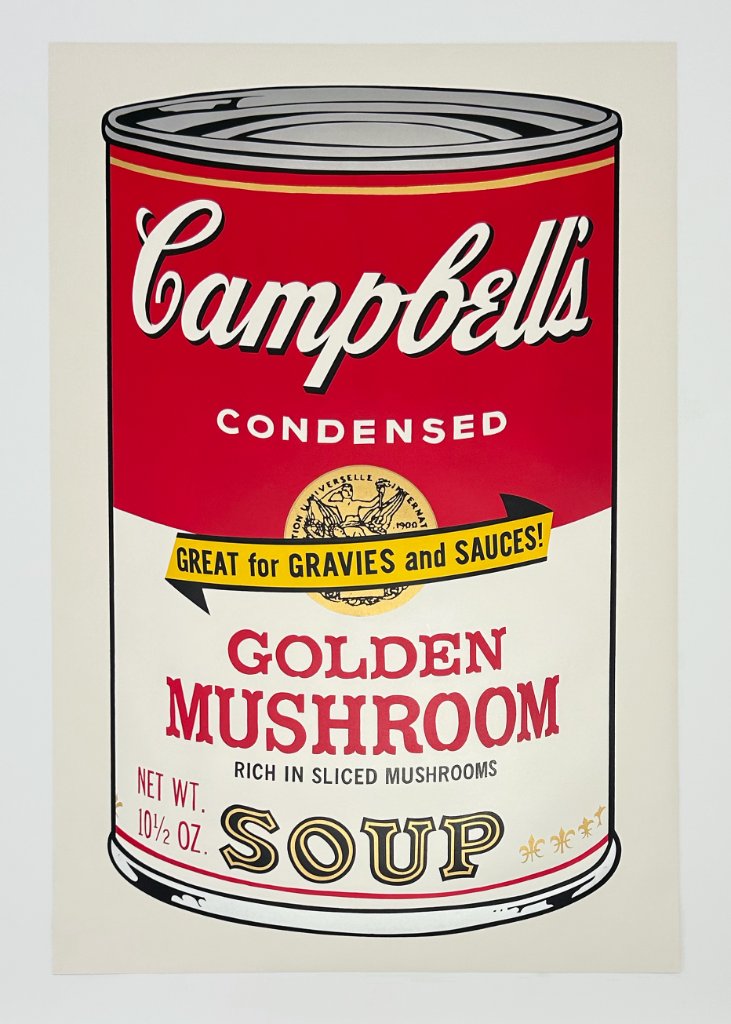
Andy Warhol, Campbell’s Soup Can — Golden Mushroom, 1969 screenprint, Edition of 250, signed — mint condition.
Authentication: The Andy Warhol Art Authentication Board
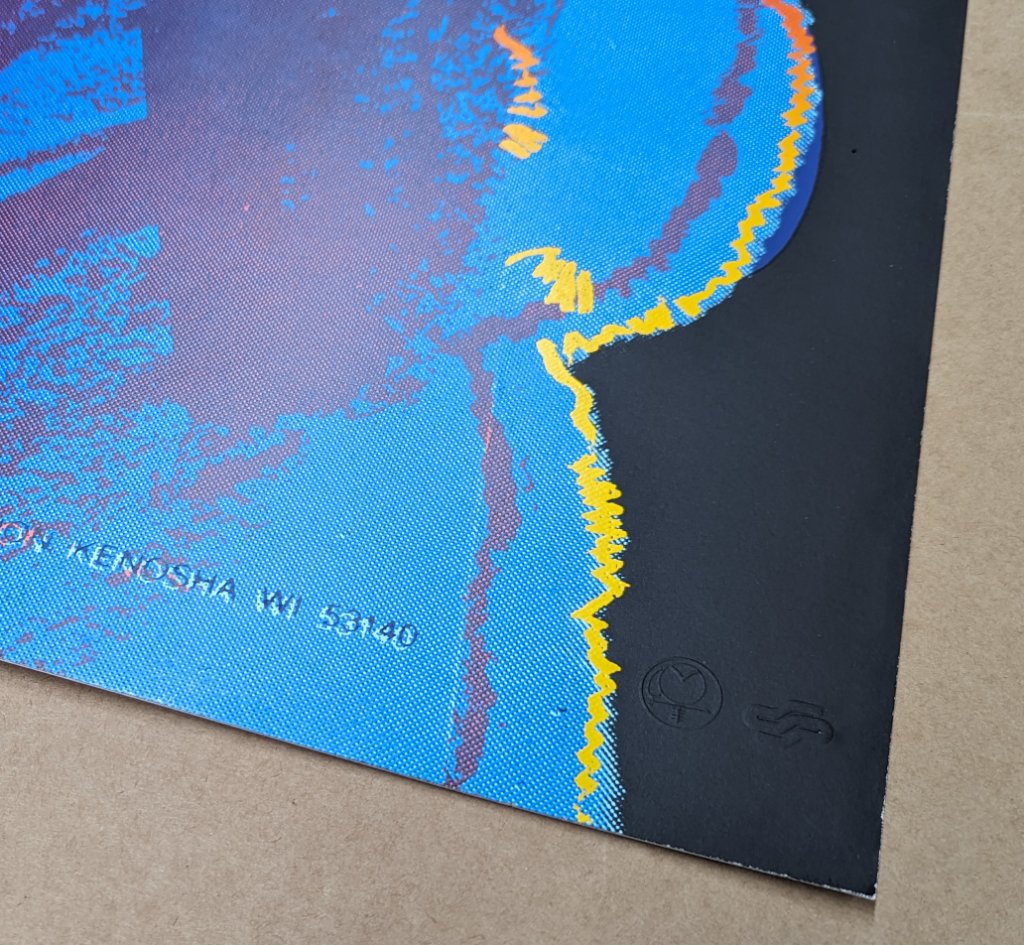
Example of Andy Warhol Art Authentication Board inkstamps and reference numbers on the verso of a print.
For works produced during Warhol’s lifetime (pre-February 1987), the gold standard for authentication was the Andy Warhol Art Authentication Board — a body that issued formal opinions on works submitted to them. Critically, the Board ceased operations in 2011 and will no longer authenticate new submissions.
This means that for any Warhol work without existing Authentication Board documentation, you are relying on: provenance documentation (exhibition history, prior sale records, receipts), specialist opinion from recognized Warhol scholars, and in some cases, technical analysis.
A clean provenance chain — ideally one that traces back to the original publisher or a major auction house — is worth more than any verbal assurance. Ask for it. Expect it. If it isn’t available, price the work accordingly.
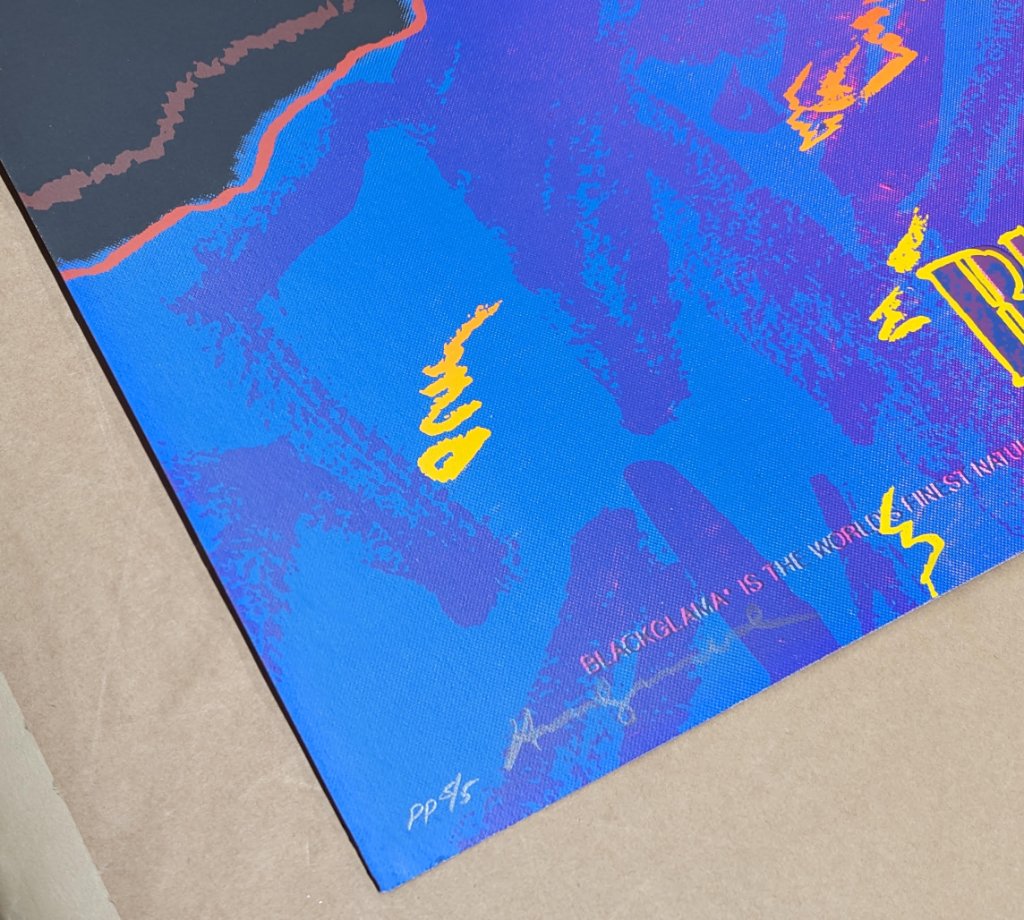
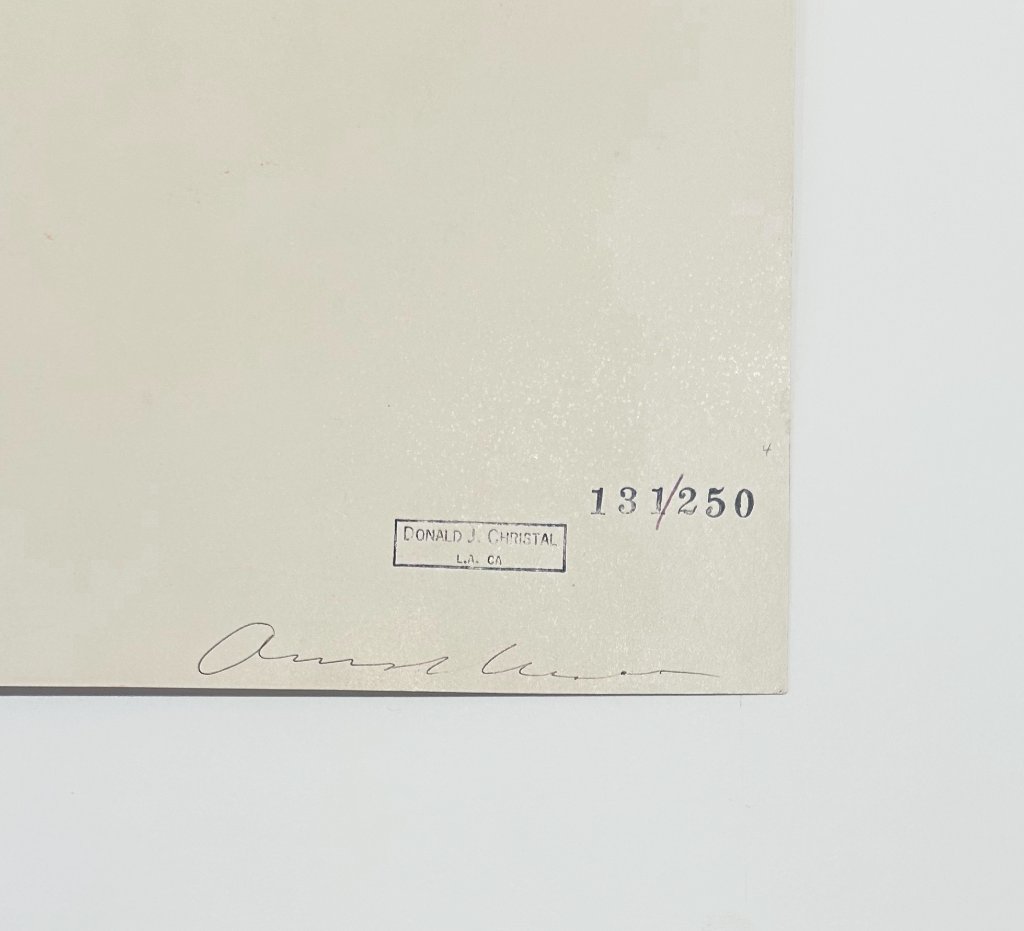
A Warhol screenprint Printer’s Proof (PP 5/5) from a private placement — one of only five pulled outside the main edition. The “PP” designation and hand signature are visible in the lower margin. These rarely surface publicly.
What to ask before you buy
- What is the Feldman & Schellmann catalogue number?
- What is the stated edition size, and where is the edition number on the work?
- Who was the original publisher and printer?
- What is the full provenance — where has this work been since it was published?
- Is there prior auction history? At what price, at which house?
- Does the work have any existing Authentication Board stamp or documentation?
- What condition issues, if any, are present — and have they been disclosed in writing?
What Should You Expect to Pay?
For desirable imagery — Marilyn, Flowers, Campbell’s Soup, Dollar Signs — in excellent condition from a reputable source, expect to pay at least $50,000. Works from the headline series in top condition routinely exceed that, with major examples achieving $250,000 and above.
That said, there is real value to be found in the less-celebrated series. Works like Space Fruit, Cowboys and Indians, or Details of Renaissance Paintings carry the same Warhol imprimatur with considerably less price competition. These are where patient, knowledgeable collectors often find the best entry points — without sacrificing the quality and legitimacy of the work.
Use Comparable Sales — But Understand What You’re Looking At
Sites like Artsy and MutualArt will show you what other sellers are listing comparable works for — a useful benchmark for understanding where the market is positioned. But listing prices are asking prices, not selling prices. The actual transaction data lives at the auction houses: Christie’s, Sotheby’s, Phillips, and Bonhams all publish their realized results, and those numbers are what you want to anchor your thinking to.
“A lower auction comp doesn’t always mean a better deal. It often means there was a condition issue the catalogue description buried in a footnote.”
This is one of the most common traps I see collectors fall into. They find a comp that sold for 30% below the current asking price and think they’ve found an argument for negotiating. What they’ve often found is a work with fading, a tear, or mat burn that only became apparent when someone examined it in person at the preview. Auction condition reports are helpful, but they are not exhaustive — and sellers have no obligation to lead with bad news.
This is precisely why having an insider, a trusted dealer, or simply going to see the work in person before you bid is so important. No amount of online research substitutes for eyes on the physical object.
Condition Is Everything
Warhol’s screenprints are produced on paper, which means they’re vulnerable to the same enemies as all works on paper: light, humidity, acidic framing materials, and improper storage. Fading, foxing, tears, and mat burns can significantly impact value — and unlike oil paintings, paper-based works are harder to restore without visible intervention.
Always ask for a condition report. If buying at auction, inspect the work in person during the preview. If buying privately, commission an independent conservator’s assessment for anything above $10,000.
The Private Dealer Advantage
Buying Warhol prints through a private dealer — rather than at auction — often means better access to provenance documentation, more time to do due diligence, and pricing that isn’t inflated by the buyer’s premium (typically 25–30% on top of the hammer price at major houses).
A good private dealer has already done the authentication and provenance research, and their reputation depends on standing behind what they sell. That accountability is worth something. The trade-off is that private transactions are less transparent than public auction results — which is exactly why I always encourage collectors to do their own comparable research regardless of where they buy.
Buying a Warhol print well is absolutely achievable for a serious collector. The market rewards buyers who do their homework: know your F & S numbers, insist on provenance, anchor your pricing to actual auction results, and — whenever possible — see the work with your own eyes before committing.
The works shown here are examples of private placements — pieces sourced and placed quietly, well outside the public auction market. If you’re looking at a specific work and want a straight second opinion, or if you’re looking for access to works that don’t show up on Artsy, that’s exactly what I’m here for.
Looking at a Warhol?
Send me the details — edition number, condition, asking price — and I’ll give you a straight assessment. No obligation, no sales pitch.
Get in Touch →